

Why do journalists keep showing up?
Journalists serve as the bridge between events and the public, disseminating the truth but often carrying the weight of it so others do not have to.

Craig McKee left the Air Force after four years of service and transitioned to civilian reporting in 2000. While he no longer wears a military uniform, he tells the stories of other veterans that inspire real-world action.
These stories, McKee said, are the most fulfilling.
His award-winning series “Homefront,” which he created and produced while working for WCPO9 in Cincinnati, Ohio, highlighted local stories and community initiatives in the military and veteran community.
McKee used the series to expose how veterans often struggle to obtain access to health care, housing, employment and mental health resources after leaving the military, and shared the stories of World War II and Vietnam War veterans and their spouses.
One investigative piece found that $30 million in veteran funds in Hamilton County was left unspent over five years, despite the county housing some of the highest numbers of veterans in Ohio.
McKee said the story exposed decades of fraud and abuse in the government and prompted a complete overhaul of local veteran services.
“Those types of stories stick with me,” McKee said. “A dental program, a transportation program, a vision program and all these other things are now in place for veterans there, and that’s all because of journalism…I feel damn good about that.”
Another piece he produced told the story of a World War II veteran who was deployed to Pearl Harbor after Japan attacked the Hawaiian military base in 1941. McKee said the veteran was directed to defend the island with only ten bullets.
“It’s small little nuances that, I think, tell the story, the sacrifice and service, and ultimately, as we continue on, the post-traumatic stress and the traumatic brain injuries and the consequences of war…” McKee said. “If I can shine a light on those problems and the issues and both lift them up and give them a hand up, that’s what fulfills me.”
Even with the emotional strain, McKee said the work remains essential because most people simply do not have the time or ability to follow events closely.
Parents juggle endless responsibilities, McKee said. Many of them receive news in quick moments between work, school drop-offs and prepping dinner.
That reality, McKee said, is why journalism matters. Journalists serve as the bridge between events and the public, disseminating the truth but often carrying the weight of it so others do not have to.
“We need to remind that mom and dad who feel they’re underwater, ‘Hey, here’s some things you should probably be aware of, and here’s what’s going on,’” McKee said.
For Bill Carter, the answer was less immediate. When he first arrived in Sarajevo with TSRT during the Bosnian War, he did not intend to stay.
“I really wanted to leave after a couple weeks because it was horrible,” Carter said. “I didn’t have a camera yet. I was taking photographs, but I was afraid of it. It felt wrong.”
Eventually, Carter said the friendships he formed and the way residents fought to maintain ordinary life inspired him to return to the city with a video camera.
In “Kiss the Future,” Carter said he began working for a show called Rat Art, which broadcast stories and events about art in wartime, at Radio-Televizija Bosne i Hercegovine (TV BiH), a local television station.
“You got to figure out what you’re doing in this place, or you need to get out of this place,” Carter said. “What am I doing here? That was starting to gnaw at my brain, and that would inspire me to try to figure out how to do more for the place.”
Carter was working at TV BiH when MTV aired a message from Bono, the lead singer of Irish rock band U2, to the people of Bosnia.
Carter said he was inspired by the video to connect the band with the people of Sarajevo and eventually interviewed Bono at a U2 concert in Italy.
The singer said he was touched by Carter’s story and wanted to play a concert in Sarajevo, but because a concert would not be possible during the siege, Carter established satellite links between TV BiH and stops on U2’s “Zoo TV” tour to allow the people of Sarajevo to share their stories with U2’s audience.
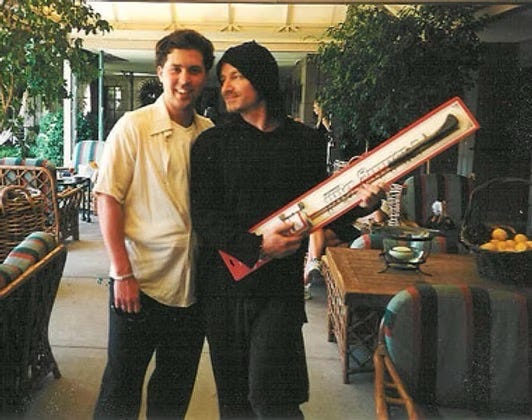
“It was one of the worst things in my life – taking this thing out of your ear which was full of life,” Carter said. “No one in this town knows we’re doing this, not really… We have no idea of the impact on their side. Is this just stupid or dumb or a waste of time? It was really quite an empty feeling.”
He said he received no immediate feedback from audiences and had no sense of whether his work made a difference outside Sarajevo. It wasn’t until much later, when U2 performed at Kosevo Stadium in Sarajevo in 1997, that Carter realized what role he played in the war: a catalyst.
He said he knew it wasn’t his job to be a hero or fix the city’s problems, but he did play a part in bringing joy to Sarajevans during the war.
In 2009, the government of Bosnia named Carter an honorary citizen of Sarajevo.
“They had, in their own time, put all this together,” Carter said. “I didn’t know they saw me as important.”
The instinct to be present when history is unfolding has shaped reporting long before modern journalism.
Keith Warren Lloyd said many correspondents in World War II were drawn to the conflict because they felt compelled to be where the story was, especially since they knew it would become a global conflict. Some journalists sensed political turmoil was brewing and traveled to Europe before the war started, Lloyd said.
Larry LeSueur was an American journalist who worked closely with Edward R. Murrow during World War II. Lloyd said LeSueur was working for United Press, a wire syndicate, when he took a leave of absence and traveled to London in 1939.
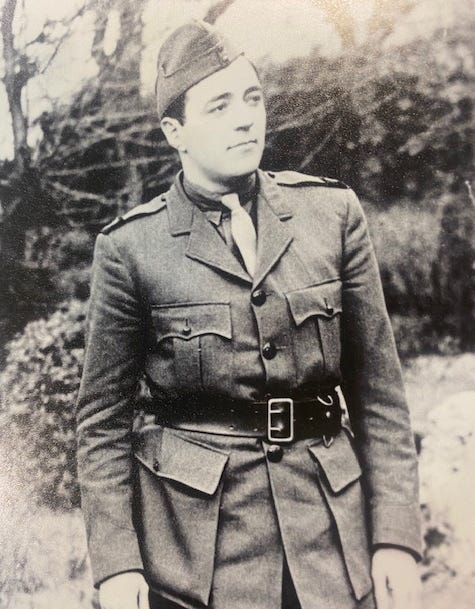
LeSueur had been monitoring Hitler’s rise to power and figured international conflict was inevitable.
“If you were a journalist and you really wanted to make a career of yourself, you couldn’t avoid it,” Lloyd said.
This sense of inevitability also influenced Ernie Pyle, who Lloyd said felt a responsibility to report on American soldiers, many of whom were young farmhands and factory workers.
As a U.S. Navy Veteran, Lloyd said he feels many Americans are insulated from the reality of war, so correspondents in World War II felt they had to help audiences understand what was really happening in Europe.
“I think some of them… felt a duty to tell stories and to make sure that people understand why we’re fighting the war and the impact that it had, and to help them understand what some of these guys went through when they came home,” Lloyd said.
Decades later, Dr. Anthony Feinstein’s research helps journalists understand why they feel this sense of purpose.
In 2026, Feinstein conducted a follow-up study on journalists who reported on the Iraq and Afghanistan wars and found they did not experience moral injury. Some of the reporters reported experiencing PTSD and depression at the time, but they all said they did not regret doing the work.
“All the journalists who did this work felt that what they were doing was very, very important work,” Feinstein said. “Looking back after 25 years, they all said, ‘We were glad we did it. We think it was important. We needed this historical record. Someone had to be there.’”
The belief that the work matters justifies nearly every risk journalists face and helps them make sense of what they are risking when they do their jobs.
Journalists document what others cannot see, explain what others do not understand and tell stories that would otherwise go untold. They return to their work time and time again because they know their presence serves a purpose.